Cupping Therapy
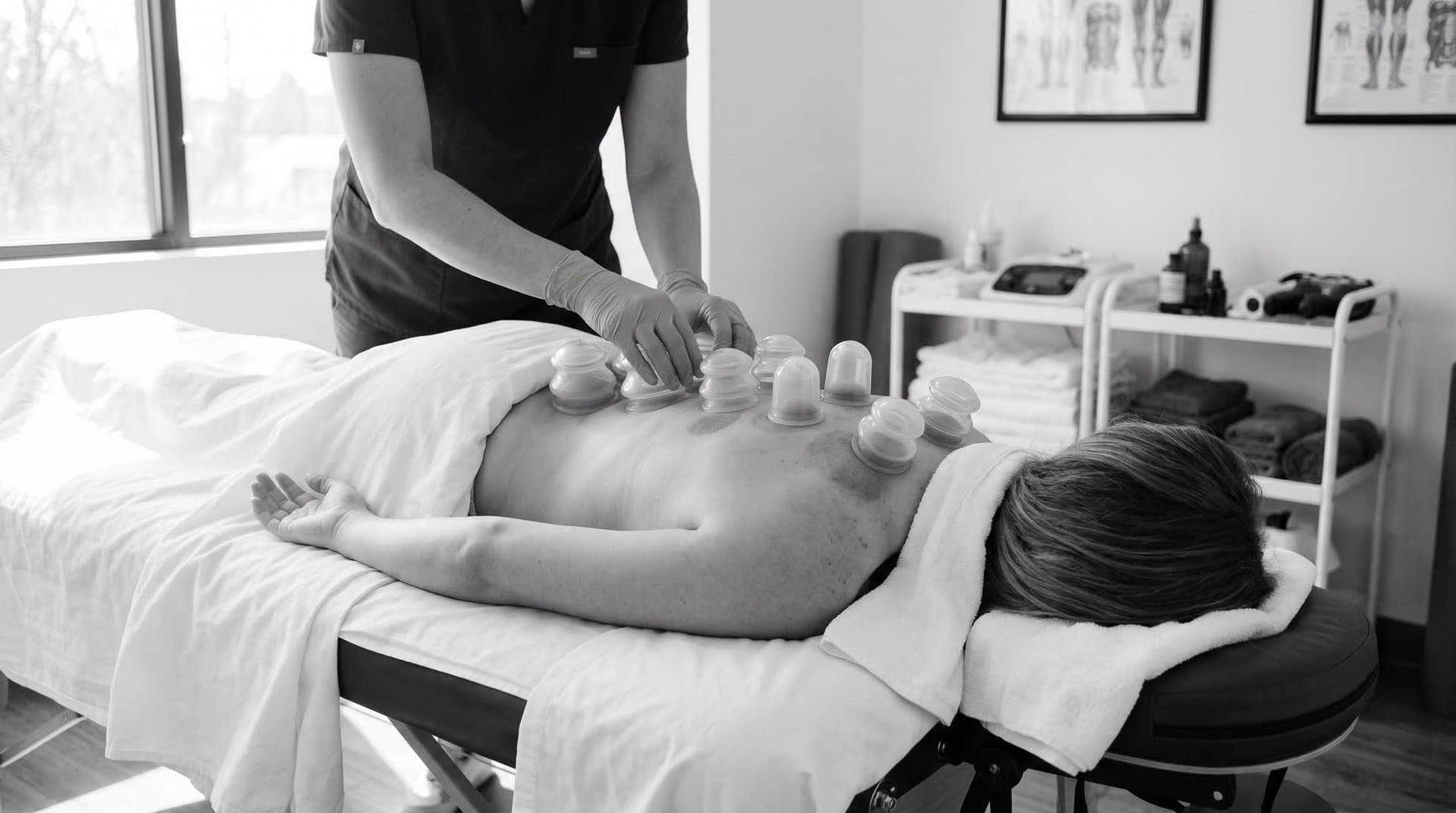
Traditional cupping combined with massage therapy. Silicone and glass cups create targeted suction to release deep fascial tension, improve blood flow, and accelerate recovery, ideal as a standalone treatment or complement to deep tissue work.
Ideal for
Chronic back and shoulder tension
Muscle recovery after intense training
Fascial adhesions and scar tissue
Stress relief and improved circulation
01Methods
Types of cupping
Cupping is not a one-size-fits-all technique. Your therapist selects the method based on your condition, treatment goals, and comfort level. Most sessions combine cupping with hands-on massage for maximum benefit.
Static Cupping
Cups are placed on specific points and left in position for 3 to 10 minutes. The sustained suction draws blood flow to the area, separates fascial layers, and creates space in compressed tissue. Best for deep chronic tension, localized knots, and areas with restricted circulation.
Best for: Chronic knots, back tension, fascial restriction
Gliding Cupping
Oil is applied and the cup is moved across the skin in slow, sweeping motions. This combines the benefits of suction with the flushing effect of massage. Covers larger areas more quickly and tends to leave lighter marks than static cupping.
Best for: Large muscle groups, IT band, upper back
Flash Cupping
Cups are rapidly applied and removed in succession across an area. The quick on-off creates a pumping action that stimulates blood flow and loosens superficial tissue without the deeper tissue separation of static cupping. Well-suited for sensitive areas or first-time cupping clients.
Best for: Sensitive areas, first-time clients, mild tension
02Aftercare
Understanding cupping marks
Cupping marks are not bruises. Bruises result from trauma that damages blood vessels. Cupping marks result from increased blood flow being drawn to the surface, which is a therapeutic effect. The colour tells your therapist about the state of the underlying tissue.
Light pink
Healthy tissue with good circulation. Minimal restriction in the area.
Duration: Fades within hours
Medium red
Moderate tension or mild stagnation. Common in areas with everyday stress.
Duration: Fades in 1 to 3 days
Dark red to purple
Significant stagnation and tension buildup. Often seen in chronically tight areas or old injuries.
Duration: Fades in 3 to 7 days
No mark at all
The tissue is healthy and circulating well. Not every area will mark, and that is normal.
Duration: N/A
When to avoid cupping therapy
Cupping may not be appropriate if you are on blood thinners, have a bleeding disorder, have sunburned or broken skin in the treatment area, are in the first trimester of pregnancy, or have certain skin conditions like eczema or psoriasis in the treatment area. If you have any medical conditions or are unsure, let your therapist know before your session. Your therapist always performs a pre-treatment screening.
03What to Expect
Your session
Your therapist assesses your tension areas and selects the appropriate cup size and technique, static placement, gliding, or flash cupping. Sessions may leave temporary circular marks that typically fade within 3-7 days. Cupping is often combined with massage for maximum benefit.
Assessment
We identify your tension areas, discuss your goals, and select the appropriate cup size and technique for your treatment.
Cupping treatment
Static, gliding, or flash cupping techniques combined with massage to release deep fascial tension and improve circulation in targeted areas.
Aftercare
You leave with guidance on cupping marks, hydration recommendations, and follow-up timing to maintain and build on your results.
04Pricing
Two formats, transparent rates
Same treatment quality whether you visit our Scarborough clinic or we come to you. All treatment types are the same rate within each format. Pricing is per session, plus HST. Insurance receipts provided after every session.
At our Scarborough clinic
In-Clinic
Includes a 30-minute option for shorter visits.
We come to you, GTA-wide
Mobile
Will cupping leave marks or bruises?
Cupping often leaves temporary circular marks that range from light pink to dark purple depending on the level of tension and stagnation in the tissue. These are not bruises. They result from increased blood flow to the area. Marks typically fade within 3-7 days.
Does cupping therapy hurt?
Most clients describe cupping as a deep pulling or stretching sensation rather than pain. Your therapist controls the suction level and adjusts based on your comfort. Some areas may feel more intense than others, but treatment should never be painful.
How long do cupping marks last?
Cupping marks typically fade within 3-7 days, though lighter marks may disappear within 1-2 days. The intensity and duration depend on the level of tension in the tissue and your body’s circulation. Staying hydrated after treatment helps marks fade faster.
Can cupping be combined with massage?
Absolutely, and we recommend it. Combining cupping with massage amplifies the benefits of both. Cupping lifts and separates fascial layers while massage works into the released tissue. Most of our cupping sessions include massage techniques for maximum benefit.
Is cupping therapy covered by insurance?
Yes. When performed by a CMTO-registered RMT, cupping therapy is covered under most extended health plans including Sun Life, Manulife, and Green Shield. It’s billed as a registered massage therapy session. Insurance receipts are provided after every session.
06Explore
Other treatments
07Locations
Available in your area
Mobile cupping therapy across Toronto and the GTA. Same rates everywhere, no travel surcharge.
Ready to feel better?
Book a cupping therapy session and your therapist will assess your needs in person. Professional treatment in the comfort of your own space.